There are over 12 VIT Pune courses which are available at UG, PG Diploma & Doctoral levels under Engineering & Technology discipline. Also, the VIT Pune fees (tuition) for Bachelors’ programs range from Rs. 7,16,520/- to Rs. 21,49,560/- for the entire duration.
At the undergraduate level, the Institute offers Bachelor of Technology (B.Tech) course across various specialisations including Computer Engineering, AI & DS Science, Civil Engineering, Information Technology, etc.
The Training and Placement Cell has built strong professional partnerships with numerous National & International companies so that students of aforementioned courses can explore diverse career opportunities with handsome packages via VIT Pune Placement drives.
For the B.Tech program, the VIT Pune fees (tuition) is between Rs. 1,79,130/- to Rs. 5,37,390/- per year. The overall tuition fee of the same course ranges from Rs. 7,16,520/- to Rs. 21,49,560/-.
Note: Other than the above-specified fees, students are required to submit Rs. 1100/- as an eligibility fee along with additional amount for development, examination, insurance, and other applicable charges.
* Students may visit the official website & contact the respective authorities to know more about VIT Pune courses and fees.
VIT Pune offers undergraduate, postgraduate and doctoral courses in various disciplines.
The institute offers four years undergraduate course in Computer Engineering. The course provides a conceptual understanding of core areas of computing and improves programming skills by using analytical skills. The program inculcates leadership skills that are essential for professional growth.
Chemical engineering develops an analytical understanding that equips students to take up the leading role in industries, academics, and entrepreneurship. Students get to know the concept of working with chemicals and its industry during the course tenure. There are a number of job opportunities available after the completion of this course.
Engineering in Electronics produces professionals who can work in a multicultural and multidisciplinary environment. They can provide support and work with modern electronic equipment. Academia aims to prepare graduates with effective entrepreneurial and organizational capability. During the course tenure, students learn work ethics and teamwork.
This four years course in Electronics and Telecommunication engineering deals with the study of fundamental and practical aspects of telecommunication equipment. Students learn to develop prototypes of IC components.
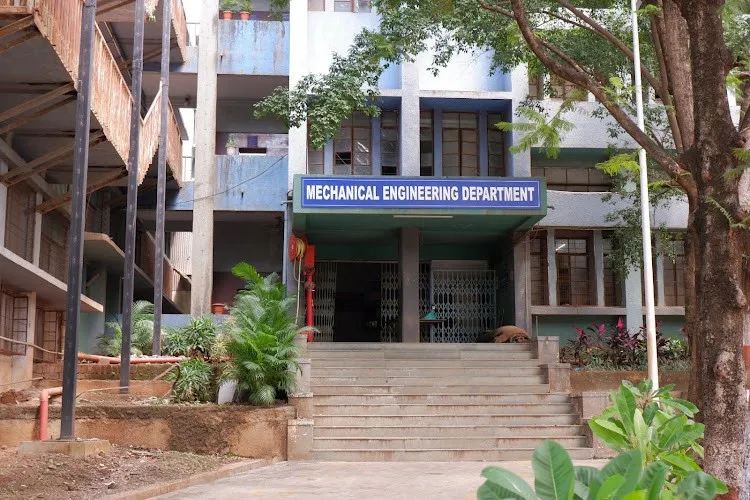
The four years course deals with Mechanical Engineering specialized area. After completing the course students can improve the effectiveness and efficiency of service-based and manufacturing industries. As this is a specialized area of the mechanical branch, the curriculum includes mechanical engineering subjects. Students also get knowledge about upgrading the existing technology.
This four years course involves designing applications of industrial instruments. Students also get to know about the installation and maintenance. Further, they lead to the Automation and Control industry.
The four-year course in IT equips students with the conceptual understanding of computing. Enhancing programming skills during the course tenure help students in the long run. Academia produces quality engineers who can give their best to society with their attitude, participation, and knowledge.
The institute offers an undergraduate course in the field of Mechanical Engineering. The program produces efficient and skilled mechanical engineers who can create heavy and power-producing machines to support industries.
The two-year postgraduate course focuses on thermodynamics, process control, and transfer operations. The curriculum is structured and covers the scope, such as the design and maintenance of the chemical industries.
The course focuses on imparting advanced conceptual knowledge and technical skills. The curriculum integrates computer and information technology to create the best solutions to problems. There are a range of job opportunities available.
The two-year post-graduate course imparts knowledge to improve the reliability and functionality of devices. The curriculum includes interesting subjects such as image processing, digital signal processing, communication engineering, etc.
The course deals with the optimization of systems and complex processes. The curriculum includes subjects such as probability & statistics, advanced operation research, Analysis and control of manufacturing systems, etc.
Instrumentation is the core of any industry. The modern engineering comprises of control and process techniques. The course offers a strong foundation in control frameworks, electrical building & interchanges, sensor frameworks, and mechanical technology. It provides knowledge of designing, installation, processing, controlling, and maintenance of a complex system that treats and uses fuels.
The program imparts knowledge in project design with testing the latest heat-mass exchange frameworks. The course also includes execution and implementation of engineering equipment along with facilities and materials.
The course focuses on mechanical aspects of designing and its applications. The curriculum includes subjects such as Theory of Mechanisms, Advanced Solid Mechanics, Concepts of Engineering Design, Theory of Vibrations, and many more.
The University offers a doctoral degree in Mechanical engineering, Instrumentation Engineering, Industrial and Production Engineering, Electronics and Telecommunication Engineering, Computer Engineering, and Chemical Engineering. The job opportunity includes an elite position in the Research organization, industry, management, universities, health care, and educational institutions.
Master of Computer Application is a postgraduate course with duration of three years. A candidate who wants to make a career in the software industry can choose this course. The program provides training in multiple technical languages. The various job opportunities include Network Administrator, Software Engineer, Software Engineer, and others related to software.